Norway team
Meet The Team.
Meet The Team.
A focused team built to drive measurable growth.
Division of Physiology, Department of Molecular Medicine, Institute of Basic Medical Sciences, University of Oslo, Norway
Jean-Luc Boulland is Professor at the Institute of Basic Medical Sciences at the University of Oslo and a researcher at the Department of Immunology, Oslo University Hospital. Trained in France and Norway, he holds a joint PhD from the University of Oslo and Université Pierre et Marie Curie (Paris VI), with a scientific profile in neuroscience. Over the past two decades, he has developed a research programme at the interface of neurobiology, medical technology and clinical translation, supported by major grants from Helse Sør-Øst, SPARK Norway, the Research Council of Norway and several private foundations. Boulland leads a multidisciplinary research group focused on implantable sensor and stimulator systems for monitoring and modulating physiological signals in vivo. This involves work and collaborations on microscale sensor platforms, including MEMS- based solutions, for real-time pressure measurements, microfluidic platforms, electrophysiology, and motion monitoring in both preclinical and clinical settings. A central part of this work is the use of large animal (swine) models to establish robust, translational platform for testing new technologies and rehabilitation strategies. Boulland’s research is inherently collaborative, involving close partnerships with clinical departments at Oslo University Hospital, as well as Sunnaas Hospital, SINTEF Digital, LIRMM and INRIA in France, the Department of Physics at the University of Oslo and the Intervention Centre. Within the BNBnet consortium, Boulland and his group bring this translational, technology-driven expertise into a broader Nordic infrastructure to promote clinically impactful innovation.

Neurosurgical department, OUS (Oslo University Hospital), Norway
Mark Züchner is a consultant neurosurgeon at the Department of Neurosurgery, Oslo University Hospital, Rikshospitalet, where he has worked as specialist since 2007. Trained in Germany, he holds a medical degree and Dr. med. from the University of Würzburg and completed his neurosurgical training in Trier in 2007. He later obtained a PhD in neuroscience from the University of Oslo, with a research profile that spans spinal cord injury, neuromodulation and translational neurotrauma research. Clinically, Züchner’s work covers complex spinal and cranial neurosurgery, with a particular interest in spinal cord pathology and functional neurosurgery. As an affiliated member of the NEurotrauma, Repair and Development (NERD) laboratory at the Institute of Basic Medical Sciences and a member of the Research Group for Functional Neurosurgery at Oslo University Hospital, he contributes to the development and clinical translation of new neuromodulation approaches. His research includes large animal (swine) models of spinal cord injury, non-invasive brain stimulation, and clinical studies on spinal cord stimulation and CSF-related disorders. He is principal investigator of several ongoing clinical trials that explore brain stimulation and intention decoding for restoring or replacing function in patients with spinal cord injury. Within the BNBnet consortium, Züchner contributes his clinical and research expertise to help develop and test new neurotechnologies in a Nordic personalized medicine framework.

Division of Physiology, Department of Molecular Medicine, Institute of Basic Medical Sciences, University of Oslo, Norway
Eis Annavini is a Senior Research Engineer at the University of Oslo with a background that bridges physics, computational neuroscience and systems-level electrophysiology. His interest in neuromorphic computing started at Sapienza University of Rome, where he carried out his thesis work in the laboratory of Prof. Paolo Del Giudice. During the next step in his career, he pivoted into the study of biological neural computing at the International School for Advanced Studies (SISSA) in Trieste, where he obtained his PhD in Cognitive Neuroscience on the neural basis of visual object representations in rodents. He finally joined the labs of Prof. Jean-Luc Boulland and Prof. Jørgen Sugar, where he investigates the use of cutting-edge technology in rehabilitation and patient welfare. His work combines in vivo electrophysiology, circuit-level neuroscience, electronic design, and advanced data analysis, spanning the entire chain from experimental design to signal processing and interpretation. Within BNBNet he exploits his diverse background and experiences to help bridge engineering and clinics.
physics, computational neuroscience, systems-level electrophysiology, neural basis of visual object representations, in vivo electrophysiology, circuit-level neuroscience, electronic design, advanced data analysis

Norwegian Centre for Molecular Biosciences and Medicine (NCMBM), Institute of Basic Medical Sciences (IMB), Faculty of Medicine, University of Oslo
Dr Charlotte Boccara is a French-Norwegian neuroscientist leading an EMBL group at the Norwegian Centre for Molecular Biosciences and Medicine (NCMBM) since 2022, as well as an adjunct researcher at the Oslo University Hospital (OUH) and the Institute of Basic Medical Sciences (IMB). She was appointed to the European Sleep Research Society Basic Science Research Committee (BSRC) in 2024 and is co-chairing the 2027 Gordon Research Conference on Spatial Cognition with Kei Igarashi. Her early career established key principles of neural coding in the hippocampal region, including extending the mapping of grid, border, and head direction cell representations across hippocampal subregions (Science 2008, Nat. Neurosci. 2010), how goal information reshapes internal representations beyond purely spatial coding (Science 2019), and that cortical memory replay can occur independently of the hippocampus (Science 2017). Her group evidenced self-motion signal encoding across the hippocampal region (Nat. Commun. 2022) and is now examining how sleep drives the transfer of newly learned traces from hippocampus to cortex. In parallel, her ERC-supported team now combines electrophysiology with molecular and computational tools to investigate how sleep contributes to healthy development. Drawing on expertise ranging from mathematics and engineering to molecular biology and medicine, they are developing tools to monitor, manipulate, and analyse cognition and sleep across the lifespan. Notably they have recently presented a unique method to reliably perform chronic electrophysiological recordings and decode sleep states from freely behaving rat pups at the beginning of their second week of life – an approach that has generated substantial community interest.
systems neuroscience, sleep, hippocampal region, neural coding, spatial cognition, electrophysiology, molecular and computational tools

Norwegian Centre for Molecular Biosciences and Medicine (NCMBM), University of Oslo, Norway
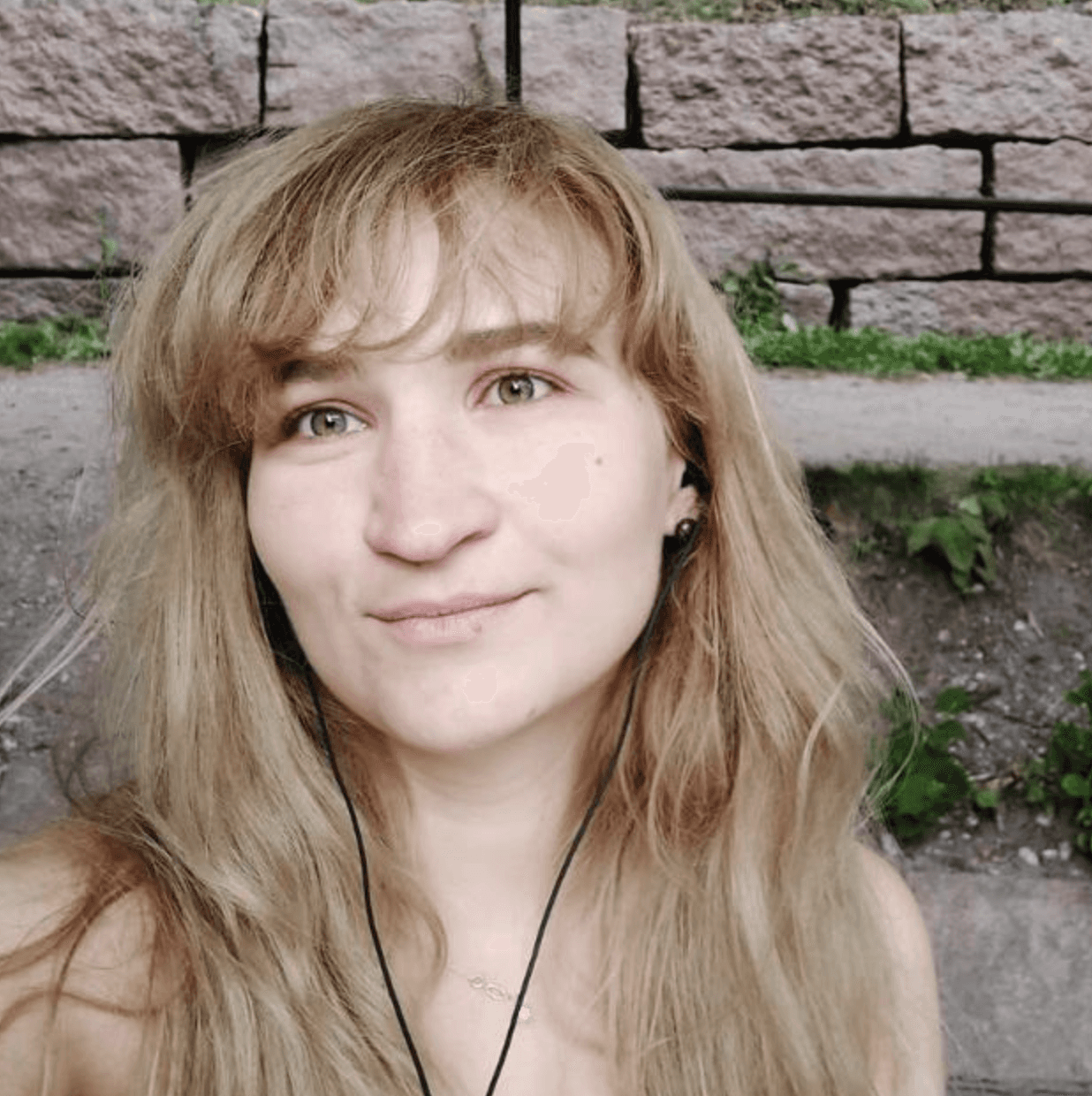
Solomiia Korchynska is a Researcher at the Norwegian Centre for Molecular Biosciences and Medicine (NCMBM), University of Oslo, working within the group of Charlotte Boccara. Trained in Ukraine and Austria, she holds an MSc in Human and Animal Physiology from Ivan Franko National University of Lviv and a PhD in Medical Neuroscience from the Medical University of Vienna. Her doctoral and postdoctoral work established a strong profile in molecular and systems neuroscience. Since joining the University of Oslo in 2021, Korchynska has shifted the focus of her research to the neurobiology of sleep across early development, working at the interface of systems neuroscience, behavioural physiology and translational technology. As the group's lead experimentalist, she has developed a toolkit for chronic in vivo electrophysiology and high-density silicon-probe recordings in pre-weaning pups during wakefulness and sleep. Her research has received competitive funding, including an EMBO Postdoctoral Fellowship, a Scientia Fellows II Fellowship (Marie Skłodowska-Curie Actions), and Anders Jahre's Award for Medical Research. Within the BNBnet consortium, she brings this expertise into a broader Nordic infrastructure for clinically impactful innovation.
molecular and systems neuroscience, neurobiology of sleep, systems neuroscience, behavioural physiology, translational technology, chronic in vivo electrophysiology, high-density silicon-probe recordings.